Email or Poster? Match the Channel to the Moment
Email or poster? Choose the format that fits your audience’s setting, available attention and message, so useful information reaches people at the right moment.

You are pinning a notice beside the community hall’s door when someone stops to read it, then heads inside. Across town, a colleague opens an email between appointments and saves it for later. Email or poster is not simply a choice between screen and paper: each meets people in a different setting and asks for a different kind of attention.
Email or poster depends on where attention is available
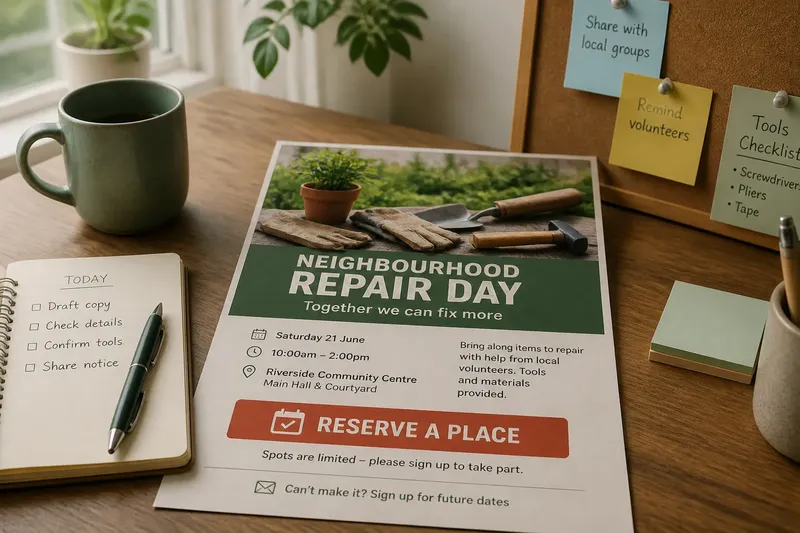
A poster works in a place where people pass, pause or wait: a library foyer, café noticeboard, workshop entrance or staff kitchen. Its reader may have only a glance, so the central message needs to be visible before the smaller details. The physical setting does part of the work by bringing the notice near an activity or audience.
Email arrives in a private stream alongside other messages. A recipient can read it immediately, leave it unread or return to it later, but the message has to earn attention in an already busy inbox. It suits people who need context, dates, links or information they may want to keep.
Think of a poster as a shop-window card and an email as a note tucked into someone’s bag. The card catches the eye at a particular spot; the note can carry more detail away from that spot. Neither format is automatically more visible: the right setting and timing matter.
A poster suits a local, glanceable invitation
Choose a poster when the audience is likely to encounter it at a relevant place and the message can be understood quickly. A notice for a reading group in a library, for instance, can reach visitors who are already near the event’s setting. A large heading, a short description and a clear date help a passer-by decide whether to stop.
Posters are also useful when the message should be visible to several people at once without asking each person to check an account. A school foyer, shared studio or community noticeboard can make a public invitation part of the surroundings. This works best when the location has a genuine connection to the people being invited; a beautifully designed poster in the wrong building is still easy to miss.
Keep the reading distance in mind. A person across a corridor should be able to recognise the subject, while someone standing close can read the practical details. If the information changes often, a printed poster may be awkward to maintain, so consider whether someone can replace or remove outdated copies.
Email suits detail, personal relevance and follow-up
Email is a stronger fit when readers need an explanation, a choice or information they may consult again. An invitation can explain who an event is for, what to bring, how to reach the venue and where to ask a question. A poster can point towards those details, but it has limited room to present them comfortably.
Email can also make a message more personally relevant. A message to registered workshop participants can include the session they signed up for and a link to the joining details. That usefulness depends on having an appropriate reason to contact those people and a subject line that makes the message’s purpose plain.
Its weakness is the inbox itself. A reader might be away from email, miss the subject line or decide the message can wait. For information that must be seen by people already gathered at a venue, a notice at the entrance may be more immediate than an email sent earlier.
Choose by the attention the message asks for
Start with the reader’s likely situation, not with a favourite design or platform. Ask whether the person needs to understand the offer in a passing glance, or whether they need a quieter moment to read, compare or act on several details.
- Use a poster for a brief announcement tied to a physical place, such as a change to a room’s opening hours or a nearby public event.
- Use email for information with several practical details, such as joining instructions or a schedule that readers may need to revisit.
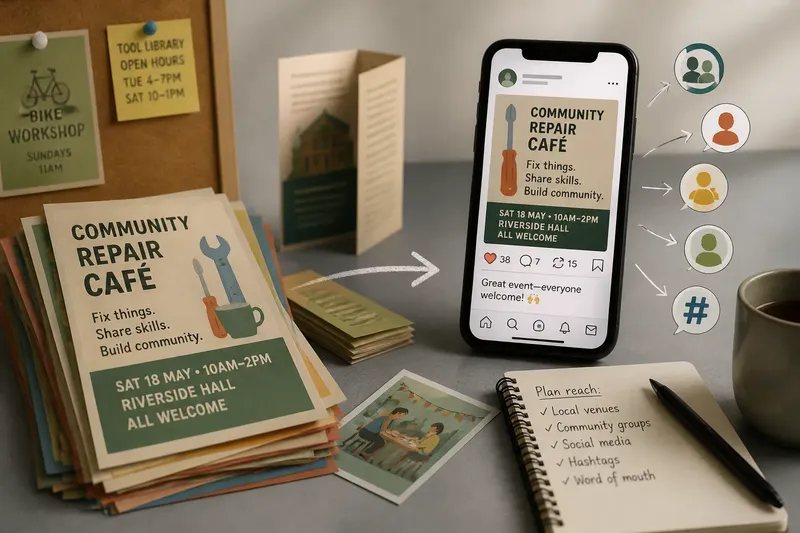
- Consider both when the audience encounters the message in person but also needs details later. Let the poster orient people and the email carry the fuller information, rather than printing the same block of text twice.
Say you are inviting residents to a repair café at a local hall. A poster at the hall and nearby library could make the date and purpose visible to people in the area; an email to people who have asked to hear about local activities could explain what kinds of items are welcome and how to make an enquiry. The expected result is that passers-by can recognise the event quickly while interested recipients have more context to consider.
Questions that help settle the channel?
Should a poster include a web address or QR code?
Include a route to more information if readers are likely to have time and a suitable device when they see it. Keep the essential invitation on the poster itself, so someone without a phone can still understand the basic offer.
Is email better for a message with several dates?
Usually, email gives a reader more room to compare dates and retain the details. If the dates concern visitors already at a venue, a compact notice there can also direct them to the fuller schedule.
Which channel reaches people who do not know the organiser?
A poster can meet people who visit a relevant public place without requiring them to be on a contact list. Email is better suited to people who have an appropriate connection to the sender or have asked to receive the message.
Can the same design work in both formats?
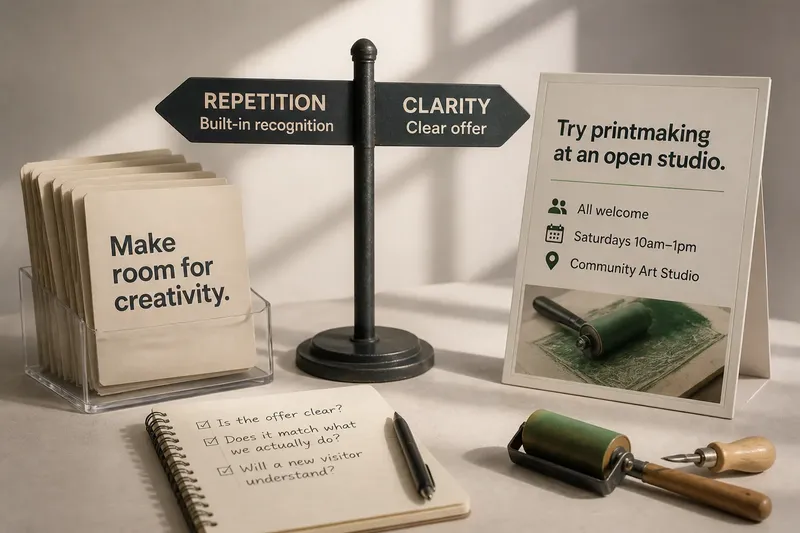
The same visual identity can help connect the messages, but the layouts need different jobs. A poster needs a readable hierarchy at a glance; an email needs a subject line and a body that make sense on a screen.
Make the choice from the reader’s setting
For a practical decision, picture where the intended reader will be and what they can reasonably give the message: a moment in a corridor, or a little time with an inbox. Then match the format to the message’s load. A short, place-bound invitation often belongs on a poster; layered details or information to revisit often suit email.
When choosing email or poster, also check whether the audience can actually encounter the channel: a noticeboard needs the right location and permission, while email needs an appropriate recipient list. Where a decision depends on a venue’s posting rules, an email platform’s requirements or local rules, check the relevant instructions. The useful channel is the one that meets readers where they are, without asking a passing glance to do the work of a careful read.