The Call to Action Has One Job: Make the Next Step Clear
A clear call to action gives readers one visible next step, making a message easier to act on and less likely to leave them weighing competing requests.

You reach the end of a community notice and find three requests: book a place, share the post and sign up for updates. The event sounds appealing, but the notice has turned a simple decision into a small sorting task. A clear call to action gives the reader one visible next step to take now.
That does not mean a campaign can offer only one thing, or that every message needs a button. It means each particular message should make its immediate invitation unmistakable. Think of the call to action as a door handle: the reader should be able to tell which door it opens before reaching for it.
A call to action names an observable action
“Find out more” sounds inviting, but it does not say what the reader will do or receive. “Read the programme” points to a specific action; “Choose a workshop” makes the next decision visible. The best wording depends on what happens after the click, tap, visit or conversation.
Try describing the action with a verb and an object: book a place, view the menu, download the map, reply with a question. If the object is not clear, the reader may have to guess whether the destination is a form, a sales page, a timetable or something else.
Keep the promise proportional to the destination. A button labelled “See available sessions” should lead to session information, not an unexpected request to create an account before showing anything. The reader can accept a larger commitment when the message tells them what it involves.
One immediate invitation reduces decision work
Messages often accumulate requests because each one seems reasonable in isolation. A group might want readers to register, follow its account, donate and tell a friend. Presented with equal weight in the same closing passage, those actions ask the audience to decide which matters most, even though the sender already knows the campaign’s immediate aim.
Choose the action that best serves the moment. Supporting details can still answer questions or help people pass the message along, but they should not compete visually or verbally with the main invitation. A secondary link may sit quietly beneath the primary one when readers genuinely need an alternative.
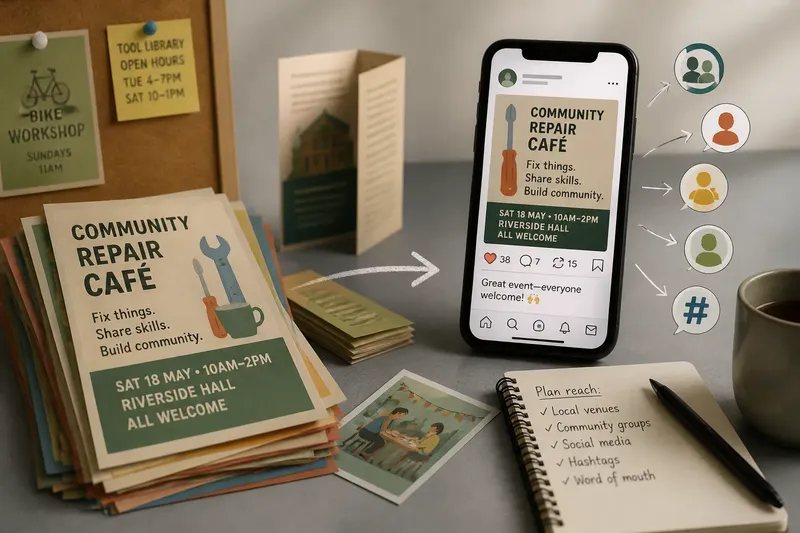
Say you are promoting a neighbourhood repair session and the main purpose of the notice is to fill its sign-up list. You could make “Reserve a place” the prominent action, then add a restrained line for people who cannot attend but want future dates. Readers who are ready can register without first weighing several equally loud choices.
That distinction is especially useful when the audience has different levels of readiness. Someone who is deciding whether to attend needs a clear route to the practical details; someone already committed may be ready to register. A message should not force both people through an unrelated request just because it is also useful to the organiser.
Make the action easy to find and understand
Placement helps the wording do its job. Put the invitation near the point where the reader has enough information to act: after the event essentials, beside a product detail, or at the end of a short appeal. If the message is long, a clear action may appear again after a substantial section, but each appearance should lead to the same next step.
Give the call to action enough visual distinction to be noticed without turning every line into a shout. A button, a short linked phrase or a clearly separated sentence can work. On a printed notice, use readable type and place the web address or booking detail close to the invitation rather than making readers hunt for it.
Specificity matters more than decorative urgency. “Register by Friday” can be useful when that deadline is real and relevant; “Act now” gives little practical information by itself. Likewise, “Join us” may suit a social invitation, but a reader still needs to know whether joining means attending, subscribing or becoming a member.
Check the destination as part of the message, not as an afterthought. A link should open the page that fulfils the promise, and the page should make the next task legible. If a poster says “View the access details”, for instance, the link should not land on a general home page where those details are buried.
Choose wording that fits the commitment
A call to action can ask for a low-effort glance or a meaningful commitment. “Browse the collection” invites exploration; “Make a booking” asks the reader to begin a transaction. Using a high-commitment verb too early may make a curious reader hesitate, while a vague, low-commitment phrase can undersell a clear opportunity.
Match the verb to what the reader must actually do. “Get your ticket” suggests a direct route to obtaining one; “Explore the event” promises information first. If the action includes payment, a form or a decision about dates, avoid language that makes it sound like a single effortless click.
There is also a difference between an invitation and a command. A direct imperative can be crisp on a ticketing page, while a considerate phrase may suit a sensitive community message. The choice should reflect the relationship with the audience, but politeness need not blur the action: “Please choose a session” remains more useful than “Have a look sometime”.
Make the wording accessible to someone scanning quickly. Prefer familiar verbs, avoid unexplained abbreviations, and ensure the linked text makes sense when read on its own. “Click here” depends on surrounding copy and assumes a particular way of browsing; “Download the access guide” carries its meaning with it.
Small edits can expose competing requests
Read the final lines of a draft and underline every verb that asks the audience to do something. If several verbs appear, ask whether they are parts of one action or separate decisions. “Choose a date and book a place” may describe a connected task; “book, follow and share” presents three different routes.
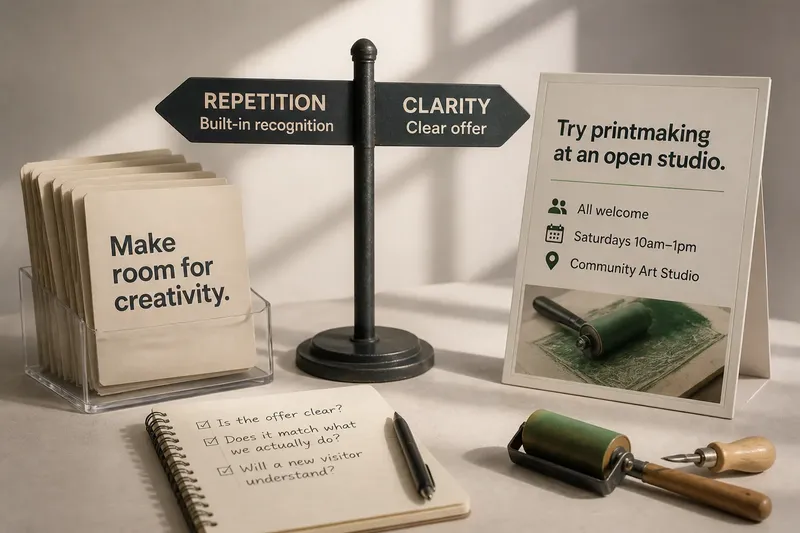
Then ask what the reader sees immediately after acting. If the answer is hard to describe in one plain sentence, the invitation may be vague, or the destination may be doing too many jobs. Clarify the landing point or rewrite the call to action before adding more persuasive language.
Imagine a small arts venue has drafted: “Explore the programme, join our mailing list and tell a friend.” If the message is meant to sell places for one performance, it could instead lead with “Choose your performance date”. The programme can explain the show, while a quieter note elsewhere can offer updates to readers who are not ready to book.
This editing pass can also reveal a mismatch between the main message and the action. A post that spends its space explaining a free drop-in session may feel oddly pushy if its only prominent invitation is to subscribe to future emails. Bring the action back into line with the reason the reader stopped to pay attention.
When should a message include a second action?
Can one message offer two calls to action?
Yes, when the actions serve genuinely different reader needs and the primary one is still obvious. Give the main action stronger placement, then offer the secondary route in quieter wording so readers do not have to guess which one the message prioritises.
Should the button repeat the headline?
Not necessarily. The headline can explain the offer, while the button names what to do next; “Free lunchtime concert” followed by “View the programme” makes those roles distinct. Repeating the same phrase is useful only if it keeps the action unmistakable.
Is “Learn more” always too vague?
No, if the destination clearly provides more information and the reader is being invited to explore rather than commit. When the next page or action is more specific, name it directly, such as “Check the venue details” or “Compare class times”.
What should a call to action say when space is tight?
Keep the verb and the essential object, then remove extra persuasion. “Book a place” is clearer than a long slogan, provided the surrounding message explains the event and the link takes readers to booking.
Clarity is part of the offer
A call to action is not a flourish pasted onto the end of a message. It is the point where the reader’s interest meets a practical choice, so the words, placement and destination all need to agree. A well-chosen invitation respects the reader’s attention by making the next move apparent.
Before sending a campaign message, read only its final invitation and follow the route it names. If you can tell what to do and what will happen next without interpreting a cluster of competing requests, the call to action is doing its one job: making the next step clear.