The Familiarity Trap: When Repetition Stops Helping
Learn when repeated marketing wording builds recognition and when a fresh description makes the offer clearer to people who have stopped noticing it.
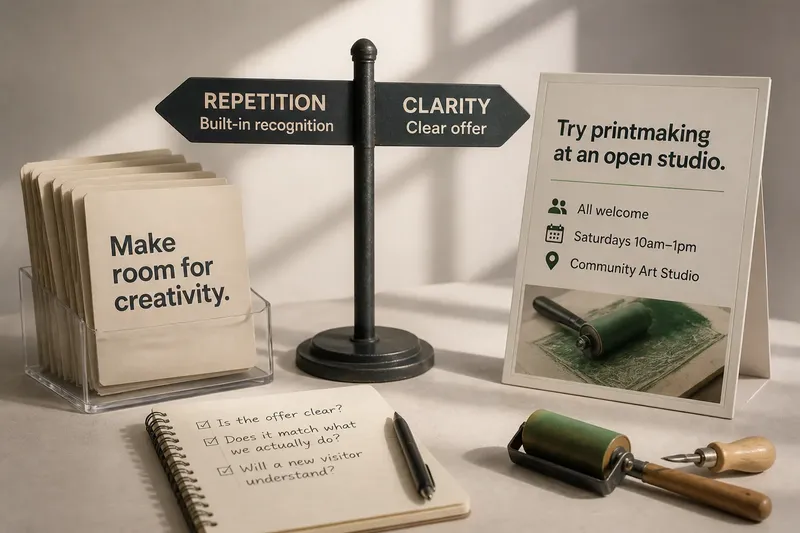
You pass the same notice on the library door each morning: “Make room for creativity.” After a while, the words register as part of the glass, not as an invitation to the weekend printmaking session inside. Repetition can make a message familiar, but familiarity is not the same as understanding. The useful question is whether people still recognise what you offer.
In promotion and marketing, repeated wording can help a name or phrase stick. It can also turn a specific offer into a blur. The right choice depends on what people already know, what they are being asked to notice and whether the wording still describes the thing they can actually get.
Keep the wording when recognition is the main job
If people already understand the offer and need to spot it quickly, consistent wording can do useful work. A neighbourhood arts centre might use “Open Studio” across its window sign, booking page and printed programme. Once visitors know that phrase means drop-in access to work tables and materials, seeing it again helps them identify the event.
Here, consistency acts like a familiar label on a folder: it helps someone find the right item without making them read every page. Keep the core phrase stable when the name is distinctive, the offer remains much the same and people are encountering it in different places.
That does not require every line around the phrase to be identical. Keep the event name steady, then make useful details easy to find: the activity, who can attend, how to take part and where to get further information. Recognition earns a second glance; clear details give that glance somewhere to go.
Refresh the wording when people recognise a phrase but miss the offer
Sometimes an audience knows a slogan so well that it stops carrying meaning. If “Make room for creativity” appears repeatedly but people cannot tell whether the session is a class, an exhibition or an open workshop, the problem is not a shortage of repetition. The line is too vague to explain the offer.
Make the description more concrete before deciding whether to retire the familiar phrase. “Try printmaking at an open studio” tells a reader what to expect; “Make room for creativity” may still work as a supporting line, but cannot do all the explaining. Put the clearest description where a person first encounters the message, rather than expecting a tagline to carry the details.
Say you coordinate a local tool library and your regular poster says, “Share more, waste less.” People recognise the line, but new visitors assume the library lends books. Imagine changing the main message to “Borrow drills, ladders and garden tools” while keeping the slogan below it. The expected observable result is that the lending offer is easier to identify before someone asks what the organisation does.
Change the emphasis when the offer itself has changed
If the service, audience or terms of participation have shifted, old wording can actively mislead. A studio that once offered occasional open sessions might now run bookable, tutor-led workshops. Repeating “Drop in and make” could suggest that no booking is needed, even if the phrase remains familiar.
In this situation, update the words that describe the changed feature first. Say “Book a tutor-led printmaking workshop” if booking and teaching are now central to the experience. Keep an established name or visual cue if it still identifies the organisation, but do not let loyalty to an old line conceal a new arrangement.
A simple editorial test helps: ask someone unfamiliar with the campaign what they think is being offered after reading the main line. If their answer reflects the previous version or a different service, revise the description. The aim is not to make every campaign sound new; it is to keep the promise accurate and legible.
Keep a signature phrase when it carries meaning across offers
A recurring phrase can be useful even when the specific activity changes, provided it has acquired a clear association. A community workshop might use “Make it together” for repair sessions, sewing groups and shared craft evenings. If regular participants understand the phrase as a signal of collaborative, hands-on events, it can connect different offers without pretending they are identical.
In that case, treat the phrase as an identity marker, not as the full description. Pair it with the name of the particular activity and a short explanation of what participation involves. A recurring line should help people recognise the source or spirit of an offer; it should not force them to guess what is happening this time.
Be cautious if the phrase could mean almost anything. Broad words such as “inspire”, “connect” or “create” may sound welcoming, but they often need a concrete companion. A good pairing gives the reader both the familiar signal and a fresh reason to pay attention.
Decide whether familiar wording still helps?
When should a campaign keep the same slogan?
Keep it when people can connect it to the right organisation or offer, and the promise behind it remains accurate. Make the practical details visible alongside it rather than changing a useful identifier simply to make the message look new.
What if people remember the line but cannot explain the offer?
Retain the line only if it contributes a recognisable identity, then add a plain description of the activity or service. If it does not help distinguish the offer, replace it with wording that names what people can expect.
Should every channel use identical copy?
Keep names and core promises consistent, but shape the supporting language for the space and the reader’s immediate need. A poster can lead with the event and date, while a booking page can give more detail about the session.
How can a team tell whether a phrase has gone stale?
Ask a few people who are not close to the campaign what they think the message offers and who it is for. If their interpretations drift from the actual offer, improve the description; if the phrase still identifies the right thing, repetition may be doing its job.
Make the decision from the audience’s point of view
When deciding whether to repeat or refresh, separate three functions that often get bundled into one line: naming the organisation, signalling a familiar kind of activity and explaining the current offer. One phrase may handle the first two well and the third poorly. Treating those jobs separately makes it easier to preserve recognition without sacrificing clarity.
For a practical review, put the current wording beside the offer as it exists now. Ask what a new reader would infer, what a returning reader would recognise and which important detail neither group can see. Keep the familiar wording where it genuinely helps; revise the part that leaves the offer hidden.
The familiarity trap is not that people see a message more than once. It is assuming that seeing the same words again will make them understand more. Repetition earns its place when it keeps an identity recognisable; precise, current language makes sure that identity still points to something people can actually choose.